Working Capital, Cash Control and Stock Reconciliation
| Roles | Accountant (Indian Oil), Sales Specialist (ADNOC Distribution), Accountant (OmnyPark) |
| Environment | Fuel distribution, retail service stations, corporate accounting |
| Tools | Excel, Tally, Oracle BI, Google Sheets |
The challenge
High-volume operations such as fuel depots and service stations generate large numbers of transactions every day. Stock movement, sales, cash and expenses must agree with each other, or small differences build into audit problems and weak cash visibility.
My approach
- Daily and shift reconciliation. Sales reports, cash handling logs and stock consumption were reconciled every shift, and variances were investigated and recorded.
- Fuel stock control. Replenishment and consumption were reconciled against inventory records to keep stock differences to a minimum.
- Cost and expense tracking. Logistics cost and operating expenditure for fuel depot dispatch were tracked and reconciled with supply chain and logistics teams.
- Receivables and payables monitoring. AP and AR ledgers were reviewed regularly to support timely collections, accurate vendor payments and healthy cash flow.
- Audit preparation. Records were kept organized and consistent so statutory and internal auditors could verify them without rework.
Controls
- Every shift reconciled and signed off before records were closed
- Variances investigated, explained and documented
- Supporting records kept ready for audit
Outcomes
- Worked with statutory auditors through annual audits at a large petroleum distribution unit, with no discrepancies raised across three consecutive years
- Maintained accurate daily sales, cash and stock records in a high-volume retail fuel environment
- Supported timely collections and vendor payments through regular ledger review
Demo: receivables ageing report
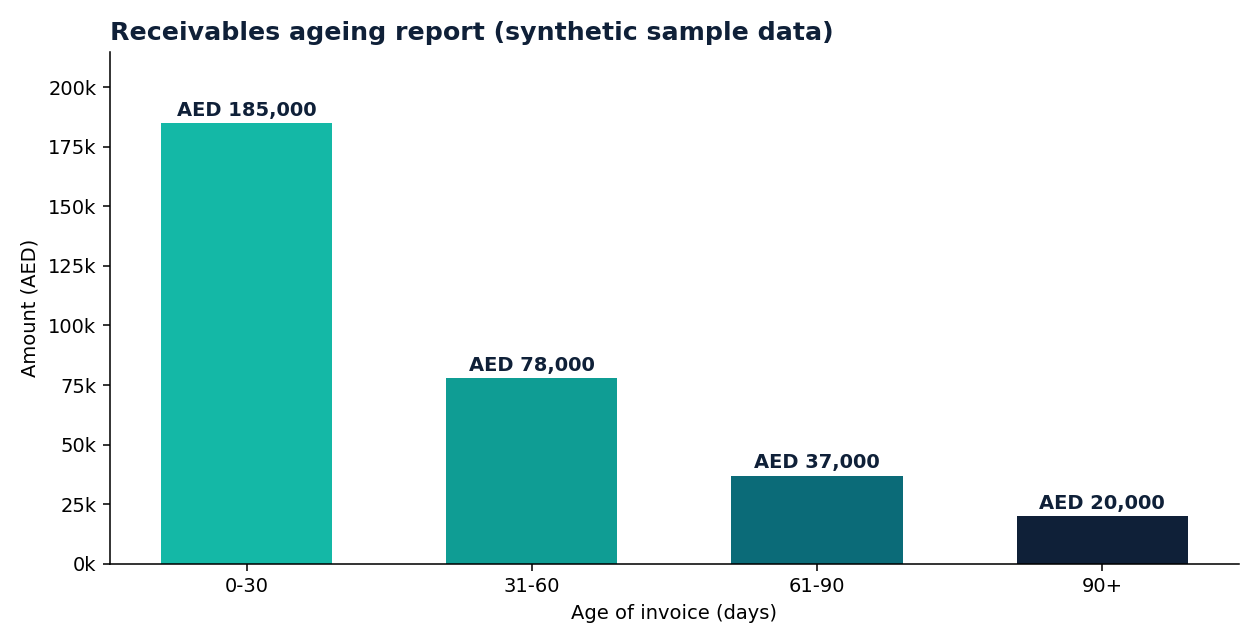 Illustrative sample using synthetic data. It shows the format of the tracker included in the toolkit, not actual results.
| Age bucket | Amount (AED) | Share of total |
|---|---|---|
| 0-30 days | 185,000 | 57.8% |
| 31-60 days | 78,000 | 24.4% |
| 61-90 days | 37,000 | 11.6% |
| 90+ days | 20,000 | 6.2% |
| Total | 320,000 | 100% |
A weekly review of the older buckets is how overdue balances are spotted and chased before they become a cash-flow problem.